Agentic Commerce · Agentic Commerce
Amazon Opens Alexa for Shopping to All Signed-In UK Customers Before Black Friday
No Prime membership is needed. Azoma's CEO calls it 'an existential change.'
· 2 min read
- AMZN
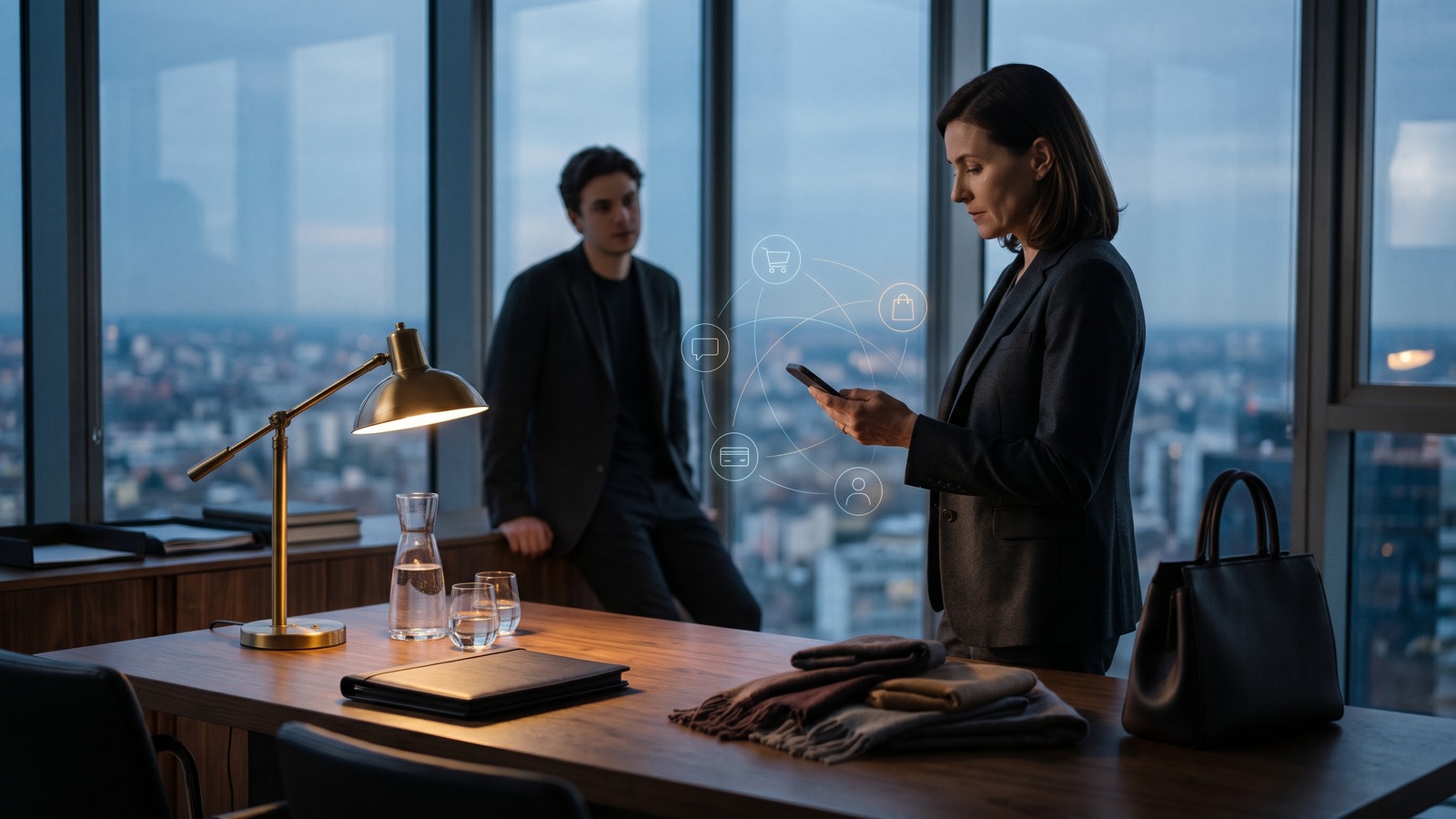
Amazon has combined Rufus, its shopping assistant, with Alexa+ for UK shoppers, pairing product advice with each customer’s preferences, shopping history and conversations across Amazon.co.uk and Alexa+.
For a brand, the shelf is no longer a page of paid and organic search results. It is an answer the assistant builds from product knowledge, information across the web and the shopper’s own history, and Amazon’s UK announcement did not say whether a brand can pay to be in it.
How does the assistant shop for a customer?
A shopper asks for a comparison and gets a side-by-side summary of features, prices and review highlights. AI-written overviews sit at the top of search results and on product pages, summing up a category before the shopper browses. Price history runs back up to a year.
Reordering skips the search altogether. A shopper who asks the assistant to “add my regular dog treats” gets a basket built from past orders, so a brand bought before can return without competing for a click. Price alerts and scheduled actions are coming, though Amazon gave no dates, and Alexa+ itself remains in Early Access in the UK.
How many people use it?
More than 400 million customers worldwide used an AI shopping assistant on Amazon’s stores in the past 12 months, Amazon said, without saying how many are in the UK. In the United States, the assistant launched May 13, and CEO Andy Jassy told analysts on Oct. 29 that customers who use it spend 50% more per order than those who do not, according to a published report.
Amazon has not published how it calculates the gap or whether the assistant causes the larger orders.
What does a brand have to do?
Max Sinclair, co-founder and CEO of Azoma, a startup focused on agentic commerce, called the launch “the biggest shift in how Brits shop on Amazon in years.” Azoma’s data show Alexa personalizes 27% more of its answers than Rufus did, a figure Amazon has not published for itself.
“For brands, this is an existential change,” Sinclair said. “Most brands have no idea what Alexa is telling their customers.” The 27% is Azoma’s own figure, and the warning is Sinclair’s.
Does a brand’s best seller appear when a UK shopper asks Alexa for Shopping for the best option in its category?