AI Capacity · AI Capacity Chips
Astera Labs' Revenue Jumped 154% to $584.9 Million. Its Next-Quarter Forecast Tops Out at $750 Million.
Some systems already carry over $1,000 of its connectivity chips per accelerator. Custom silicon waits until 2028.
· 2 min read
- ALAB
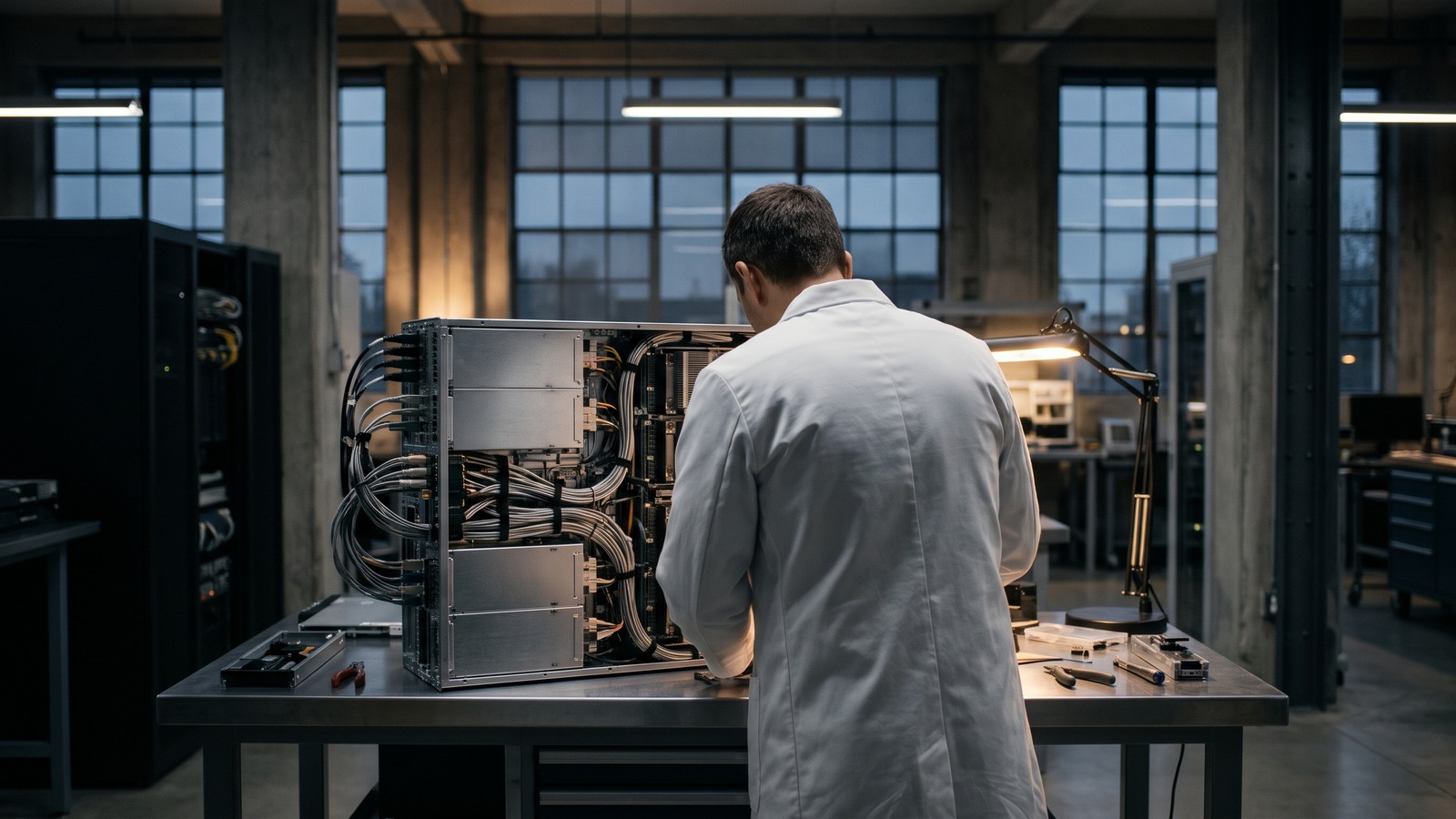
Astera Labs’ Scorpio switches, which link accelerators inside AI systems, became its largest product family and drove a 49% sequential revenue gain, with one customer taking 53% of sales.
Astera says it plans to grow the dollar value of its chips in each accelerator it serves. A buyer pricing a deployment has two lines to compare: the accelerator and the fabric that lets it work with its neighbors.
What does the guide say?
Astera guided fourth-quarter revenue to $730 million to $750 million, which at the top is 28% above the third quarter by The Denominator’s arithmetic. Revenue in the same quarter a year earlier was $230.6 million.
The profit side held up with the growth. Non-GAAP operating margin reached 44.7%, and Astera expects a gross margin of about 72% in the fourth quarter.
How much does one accelerator carry?
Some existing systems already hold more than $1,000 of Astera’s chips per accelerator, according to Futurum Group, an analyst firm. That covers the switches that connect accelerators and the chips that keep signals clean over copper cables; it is not an average across Astera’s products.
CEO Jitendra Mohan said new design wins position the company “to strongly grow our dollar content per accelerator.” Astera also said its own testing shows a memory chip paired with a Scorpio switch delivers up to 22% more tokens per second, by its internal testing.
Who is buying?
Three customers made up 77% of third-quarter revenue, Astera’s quarterly filing shows, and one accounted for 53%, up from 23% a year earlier. Revenue at that scale sits with a few buyers.
What comes after the ramp?
Custom silicon, built to a customer’s own design, is further out. The firm wrote that Astera has more than 10 active engagements, with production targeted for fiscal 2028, and that near-term growth stays concentrated in established products. Astera’s guide reflects continued Scorpio expansion and growing sales of its Aries and Taurus chips.
Orion, a rack design that lets a buyer pick its own GPU and CPU, is on track to reach customers through Astera’s server-maker partners beginning in the first quarter of 2027. Whether buyers take whole racks and software, not only chips, will show first in that quarter.