Physical AI · Plant Automation
Rockwell's Sales Rose 1% as Its Tariff Refunds Shaved Off About 4 Points
Adjusted EPS rose 16%, and CEO Blake Moret pitches Rockwell as orchestrator of AI-enabled plants.
· 3 min read
- ROK
Rockwell Automation set aside $85 million to refund customers who had paid its tariff-related price increases, in the same quarter the U.S. government refunded tariffs Rockwell itself had paid, and the two nearly canceled on profit.
That is why fiscal fourth-quarter sales of $2.33 billion look flat against $2.32 billion a year earlier while adjusted earnings per share rose 16%. For a plant buyer, the 1% is the wrong number to read demand from: most of the gap between it and the 7% core growth is the customer refunds and a divested joint venture, not orders lost.
Who paid, and who got paid back?
Rockwell received $103 million from the U.S. government in refunds of tariffs it had paid, plus $5 million of interest.
Rockwell then set up a program to return money to customers that had paid its tariff-related price increases. The $85 million accrual for the program reduced sales by about 4 percentage points.
After an $8 million related charge and taxes, the two flows added $0.11 to adjusted earnings per share of $3.88, up from $3.34. By The Denominator’s arithmetic, adjusted earnings per share would have risen about 13% without that $0.11. The effect carries into fiscal 2027: Rockwell expects organic sales growth of 6% to 9%, about 1 point of it from the lower fiscal 2026 base, and counts the $0.11 as a headwind to its $14.50 to $15.50 adjusted earnings per share guidance.
What did demand look like underneath?
Organic sales rose 3% and core sales, which also set aside a joint venture dissolution, rose 7%. Sales of Logix, Rockwell’s industrial controllers, rose 25%, which management said reflected demand and share gains rather than customers stocking up.
Software & Control, the segment that houses Logix, grew 15%. The soft spot was services: Lifecycle Services, Rockwell’s services segment, grew 2% organically, and some customers cut the scale of managed-services rollouts as inflation pushed up the cost of IT equipment.
What is Rockwell selling for AI-enabled plants?
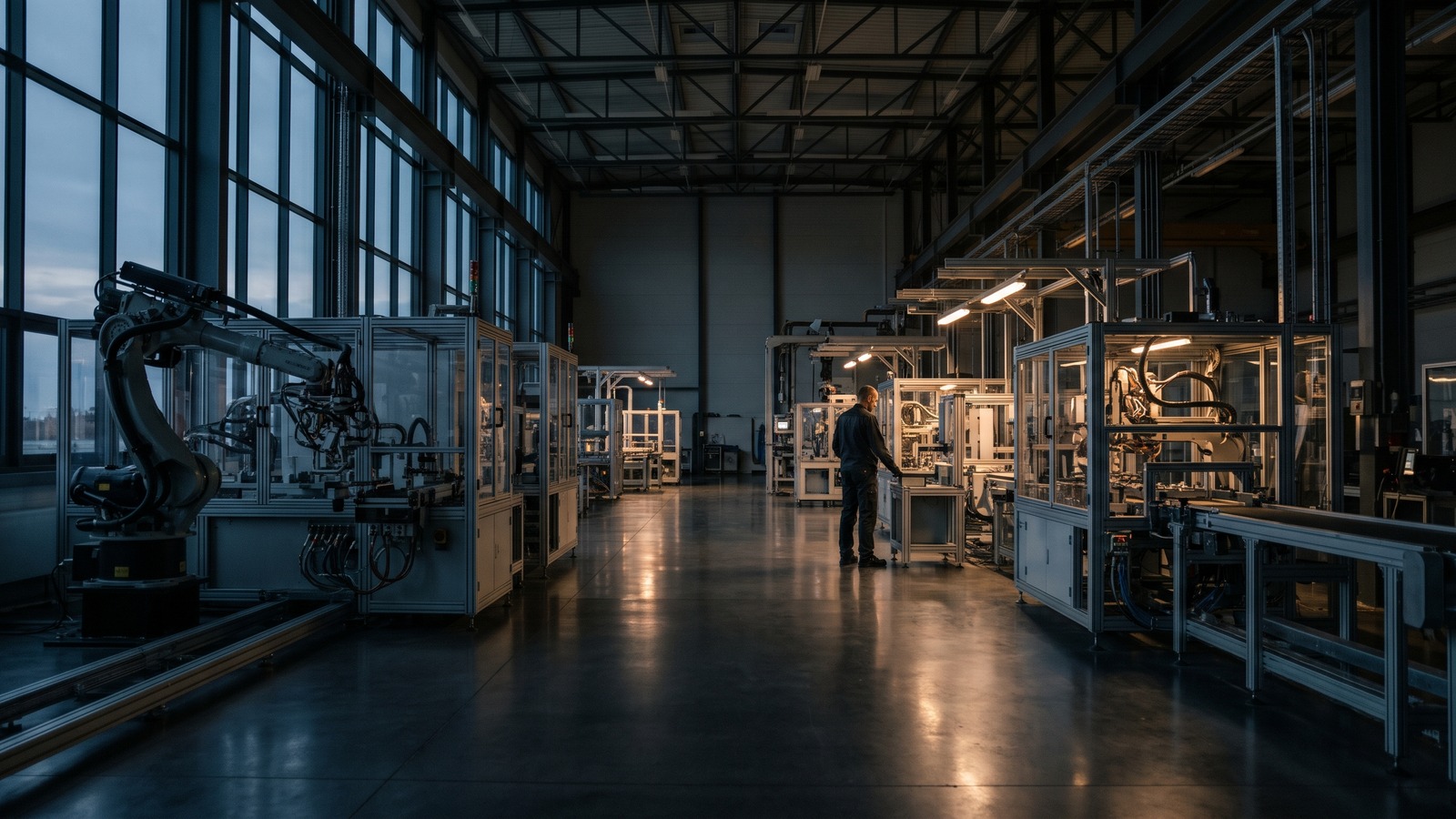
CEO Blake Moret said that as industrial operations become more AI-enabled and autonomous, Rockwell is “uniquely positioned to orchestrate plant-wide workflows,” coordinating people, AI agents and equipment in real time. Its autonomous mobile robot sales grew at a double-digit rate and turned profitable, and semiconductor and data center customers, about 10% of revenue, are expected to grow at a mid-teens rate in fiscal 2027.
Rockwell did not say what share of sales comes from AI-specific products or what a customer pays for orchestration, so a buyer cannot yet see how much of the 7% core growth that pitch earned.
The test for a plant executive: how much of what a supplier reports as growth is real demand, and how much is tariff money moving in and out of the line.