Physical AI · Robotaxi Fleets
Uber Targets 2,000 Driverless Cars by End-2027 and Wants Others to Fund 10,000
Autonomous vehicles earn a 30% utilization premium on its network, where Zoox launches in Las Vegas in November.
· 3 min read
- UBER
- TSLA
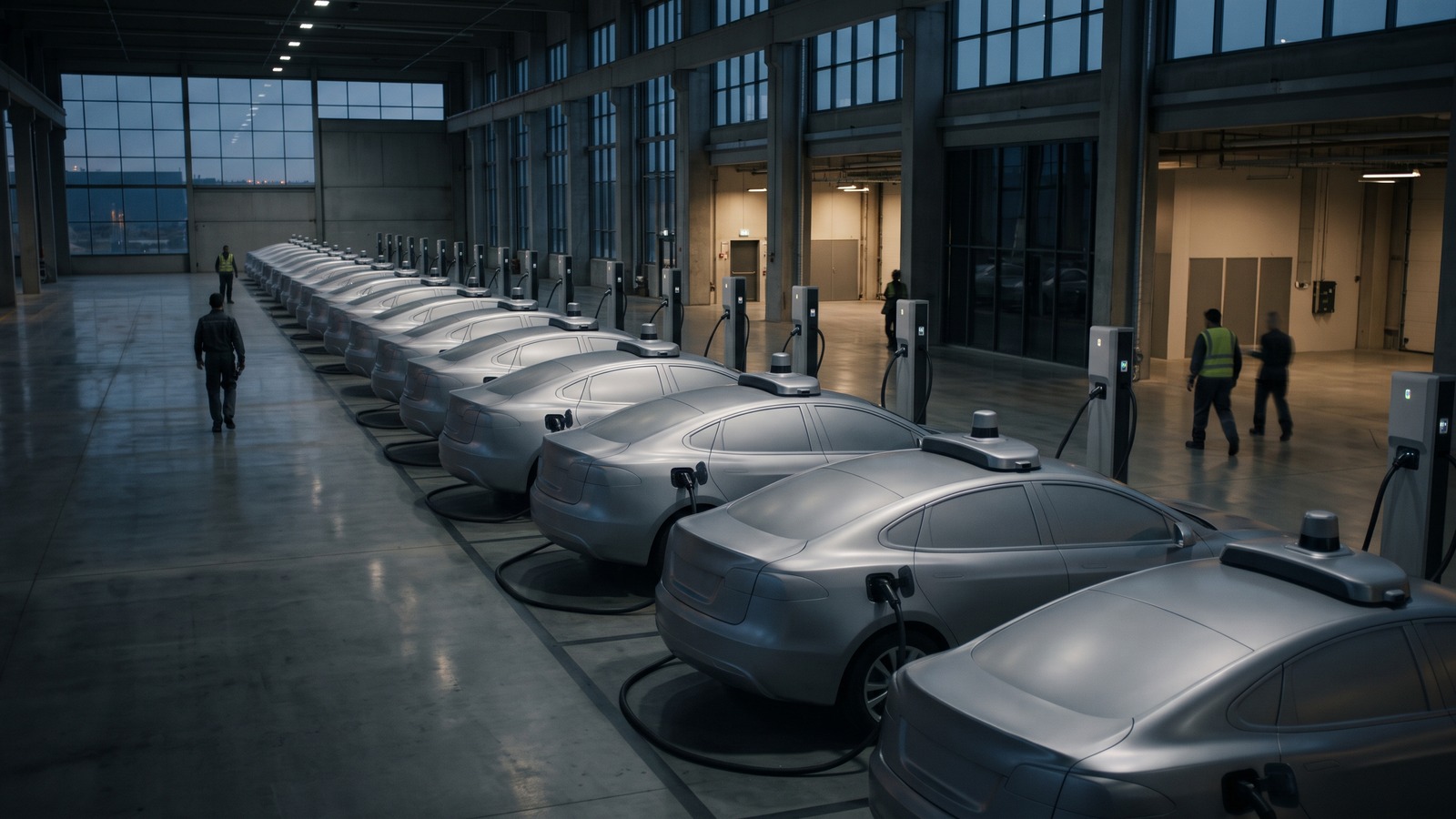
Uber expects over 2,000 fully driverless vehicles on its network by the end of 2027, from about 700 a year earlier, and CFO Balaji Krishnamurthy told analysts outside capital should pay for the 10,000-plus that follow.
That splits the fleet’s bill in two. Uber’s balance sheet takes on vehicles in the early days, but the next wave needs lenders willing to price a robotaxi on the trips it earns rather than what it will fetch at resale. Uber’s case for that loan is that its network keeps a vehicle busier than an operator’s own app can.
What is the 30% measured against?
Krishnamurthy said the 30% compares what Uber calls its hybrid deployments in the U.S. with mature fleets that operators run on their own apps. Those operator fleets have the advantage of San Francisco, a market he called uniquely favorable to robotaxis, and he expects their utilization to fall as they spread to new cities.
That is already happening, he said. In the cities Waymo and Tesla opened in 2026, each of their vehicles makes trips in the low teens a day, against the high 20s in Uber’s own markets, a lift of more than 100%.
Busier vehicles, cheaper vehicles and charging and maintenance shared across partners are how Uber expects autonomous trips to reach margins comparable to human-driven ones.
Who pays for the first 2,000?
Uber, in part, for now. Rental fleets borrow against resale value, which no one has established for an autonomous vehicle, so in the early days Uber will take vehicles onto its own balance sheet, executives said. Krishnamurthy called the capital tied up in the first 2,000 “fairly limited,” without giving a figure.
Uber has also committed $10 billion to autonomous vehicles, money it can put into partners, into fleets or both once agreed deliverables are met.
Lenders want to diversify away from data centers, Uber said. Its template is the billion-dollar financing arrangement it set up with Santander for traditional fleet partners, and Krishnamurthy said announcements on vehicle and infrastructure financing will follow.
Who fills the network?
Zoox launches on Uber in Las Vegas later in November, a season late: in March, the two companies had planned it for summer. Uber is the first outside platform for Zoox, which keeps selling rides on its own app too.
Riders in Las Vegas will be able to book Zoox robotaxis through either app. Waymo already sells rides there through its own app, across a 24-square-mile service area.
Uber expects Motional to follow with fully driverless service in Las Vegas, then to add Nuro in California and Houston and Avride in Texas in 2027, with more partners abroad. From 2028, it is aiming for tens of thousands of vehicles.
Before outside capital pays for 10,000 vehicles, Uber has to show the banks that its utilization lift holds in the cities it opens next.